

HOW TO CLEAN YOUR SECURITY SCREENS
ON THIS PAGE
Article Contents
Skip ahead to the information you’re looking for.
MORE FROM CSI
Helpful advice & ideas
EXPLORE YOUR OPTIONS
Find the right screening solution
MORE TO READ
Browse previous articles
Talk to the CSI team
From product selection through to measure and installation, Chalmers Security Installations helps Brisbane homeowners find screening solutions suited to their home, openings and lifestyle.
- Prowler Proof Authorised Dealer
- Free measure and quote
- Made-to-measure installation
SEE THE WORK
Explore the full gallery
→
Installed inspiration
News & Updates 05/06/2026
How to Clean and Maintain Your Security Screens
Security screens work hard every day. They allow fresh air into the home while helping keep insects outside and providing an added layer of security at doors and windows.
ON THIS PAGE Article Contents
A Guide for Brisbane Homeowners
Like any exterior fixture, however, they are exposed to dust, rain, humidity, insects, airborne grime and everyday wear. Without regular care, dirt can build up across the mesh, frame and hardware, affecting both the appearance of the screen and how smoothly doors and windows operate.
For homeowners across Brisbane, Logan and Ipswich, a simple maintenance routine can help keep security screens looking good and performing properly for longer.
This guide explains how to clean security screens safely, what products to avoid and how often routine maintenance should be carried out.
Why Regular Security Screen Cleaning Matters
Most security screens require very little day-to-day maintenance, but that does not mean they should be ignored completely.
A regular cleaning routine helps protect the finish, maintain airflow and identify small maintenance issues before they become larger problems.
1. Brisbane Conditions Can Leave Screens Dirty Quickly
Brisbane homes are exposed to a mixture of humidity, summer storms, dust, pollen and airborne contaminants.
Properties near busy roads, construction areas, bushland or heavily landscaped gardens may experience faster buildup, while homes closer to coastal areas can also be exposed to salt carried through the air.
Over time, residue sitting on frames, mesh and hardware can affect the appearance of the screen and contribute to premature wear.
Regular washing removes that buildup before it has an opportunity to accumulate.
2. Dirt Can Affect Airflow and Operation
One of the advantages of screened doors and windows is the ability to let fresh air through the home.
When dust and debris build up across mesh or perforated screening, airflow can gradually become restricted.
Dirt can also collect around:
- hinges
- door tracks
- rollers
- handles
- lock faces
- frame channels
Keeping these areas clean helps doors and windows continue to open, close and lock smoothly.
3. Routine Care Helps Protect Your Investment
Security screens are designed for long-term use, and routine care forms an important part of keeping them in good condition.
Using mild cleaning products and non-abrasive tools helps preserve powder-coated finishes and screen materials, while harsh chemicals or abrasive cleaners can permanently damage the surface.
For Prowler Proof products, homeowners should also follow the manufacturer’s current care and maintenance requirements so that the screens are maintained in accordance with applicable warranty conditions.
What You’ll Need
Cleaning security screens does not require specialist equipment.
In fact, a gentle approach is usually best.
You will need:
- mild cleaning solution suitable for powder-coated surfaces
- a bucket of clean or warm water
- soft sponge or microfibre cloth
- soft-bristle brush
- garden hose or clean rinse water
- clean microfibre cloth for drying
- appropriate dry lubricant for lock maintenance where recommended
Prowler Proof also offers dedicated screen-care products designed for cleaning its security screens.
IMPORTANT: AVOID HARSH CLEANING PRODUCTS
Do not use aggressive chemicals or abrasive tools on security screens.
Avoid:
- bleach
- ammonia-based cleaners
- turpentine
- strong solvents
- steel wool
- abrasive scourers
- stiff or metal brushes
These products can damage powder coating and other finishes, sometimes without the damage becoming immediately obvious.
Step-by-Step: How to Clean Security Screens
Screen Doors and Windows
1. Remove Loose Dirt First
Before applying water or cleaning solution, gently remove loose dust, insects and debris using a soft brush or dry cloth.
This prevents loose grit from being dragged across the powder-coated frame during washing.
Pay particular attention to corners, tracks and areas where debris tends to collect.
2. Wash Gently
Mix a mild cleaning solution with clean water.
Using a soft sponge or microfibre cloth, gently wash the:
- screen mesh or perforated panel
- aluminium frame
- handles
- external hardware
- surrounding tracks and channels
There is no need to scrub aggressively.
Allow the cleaning solution to loosen dirt rather than relying on pressure or abrasion.
3. Rinse Thoroughly
Once the screen has been washed, rinse it thoroughly with clean water.
Do not allow detergent or cleaning residue to remain on the surface.
A normal garden hose at gentle pressure is generally sufficient.
4. Dry the Screen
Use a clean microfibre cloth to remove excess water and help prevent water marks.
Drying the screen also provides a good opportunity to inspect it closely.
Look for:
- damaged mesh
- loose components
- worn rollers
- damaged seals
- changes to the powder-coated finish
- locks or handles that are becoming difficult to operate
If something appears damaged or no longer functions properly, it may be worth arranging professional servicing rather than forcing the component.
Cleaning Locks, Hinges and Rollers
Hardware should also be cleaned regularly, but moving components require a slightly more careful approach.
1. Brush Away Surface Buildup
Use a soft-bristle brush to remove dust and debris from:
- hinges
- roller tracks
- lock faces
- handles
- door channels
Tracks can collect a surprising amount of dirt, particularly on sliding security doors.
2. Wipe Hardware Gently
Use a damp cloth with a mild cleaning solution to wipe exposed hardware.
The cloth should be damp rather than saturated.
Avoid flooding locks, hinges or other moving mechanisms with water.
3. Keep Cleaning Fluids Out of Lock Cylinders
Do not direct water or cleaning products into the key cylinder.
Liquids inside a lock mechanism can contribute to corrosion or interfere with its operation.
If the lock begins to feel rough or difficult to operate, appropriate lubrication or professional servicing may be required.
4. Keep Tracks Clear
For sliding security doors, inspect the bottom track regularly.
Small stones, leaves, insects and general debris can interfere with rollers and make a door feel heavier or rougher than it should.
Removing this material early can reduce unnecessary wear.
Lock Cylinder Maintenance
Lock cylinders may occasionally require lubrication.
Where lubrication is recommended, use a product suitable for the particular lock mechanism and follow the manufacturer’s care instructions.
Avoid applying general household oils indiscriminately inside lock cylinders, as some lubricants attract dust and grime and can make the mechanism progressively harder to operate.
If a lock becomes consistently stiff, difficult to turn or unreliable, contact a security screen professional rather than forcing the key.
What to Avoid When Cleaning Security Screens
DO USE
- mild cleaning solution
- products recommended for powder-coated aluminium
- soft microfibre cloths
- soft-bristle brushes
- clean rinse water
- garden hose at gentle pressure
- appropriate manufacturer-recommended maintenance products
DO NOT USE
- bleach
- ammonia
- turpentine
- aggressive solvents
- steel wool
- scouring pads
- abrasive brushes
- harsh chemical cleaners
- excessive water around locks and moving components
What About Pressure Washers?
A normal garden hose is generally the safer choice.
High-pressure cleaning can place unnecessary force on mesh, seals, powder-coated surfaces and hardware, particularly if the nozzle is held too close.
For routine residential maintenance, gentle washing with a hose, cloth and mild cleaner is usually all that is required.
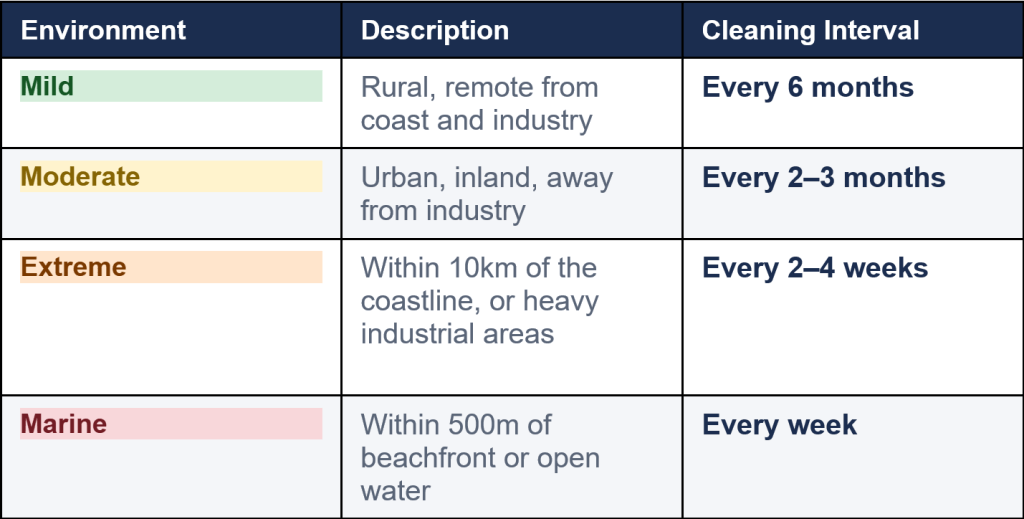
How Often Should Brisbane Homeowners Clean Their Security Screens?
There is no single cleaning interval that suits every Brisbane property.
How frequently your screens need attention depends largely on environmental exposure.
A home in a sheltered suburban street may require less frequent cleaning than one exposed to:
- heavy traffic
- dust
- construction activity
- dense vegetation
- pool chemicals
- industrial contaminants
- coastal or salt-laden air
As a practical rule, inspect your screens regularly and clean them whenever visible dust, grime or environmental residue begins accumulating.
Homes exposed to harsher conditions should be cleaned more frequently.
The important thing is consistency. A quick routine clean performed regularly is much easier on the screen than allowing months or years of buildup to accumulate.
When Cleaning Is Not Enough
Sometimes a screen needs more than routine maintenance.
Contact a professional if you notice:
- damaged or torn screening
- a frame that has become distorted
- loose hardware
- rollers that no longer move smoothly
- locks that are difficult to operate
- damaged handles or hinges
- corrosion or coating deterioration
- a door that no longer closes or latches correctly
Chalmers Security Installations provides servicing and general maintenance for security doors and window screens across Brisbane and surrounding areas.
If your screens are no longer operating as they should, CSI can inspect the problem and advise whether adjustment, servicing, component replacement or a new screen is the most appropriate solution.
Looking After Your Prowler Proof Security Screens
Prowler Proof security screens are designed for durability, but regular maintenance remains an important part of protecting their finish and performance.
Following the manufacturer’s current care instructions, using mild cleaning products and keeping tracks and hardware free from debris can help your screens continue looking and operating as intended for years to come.
If you are unsure how to maintain an existing screen, or something does not appear to be working correctly, Chalmers Security Installations can help.
Need Help With Your Security Screens?
Chalmers Security Installations supplies, installs and services security screens across Brisbane’s western suburbs, greater Brisbane, Logan and Ipswich.
Whether you need help maintaining an existing screen or are considering an upgrade, contact CSI to arrange an assessment or free measure and quote.
Frequently Asked Questions
Use a mild cleaning solution with a soft microfibre cloth, sponge or soft-bristle brush. Gently clean the screen and frame, rinse thoroughly with clean water and dry with a soft cloth.
Avoid abrasive tools and harsh chemicals such as bleach, ammonia, turpentine and strong solvents. Steel wool, scouring pads and aggressive cleaners can damage the powder-coated finish.
For Prowler Proof screens, follow the manufacturer’s current care and maintenance instructions and use recommended screen-care products where appropriate.
Cleaning frequency depends on the environment around your home rather than a single schedule for every property.
Screens exposed to busy roads, construction dust, dense vegetation, pool chemicals, industrial contaminants or salt-laden coastal air may need cleaning more frequently than screens in a sheltered suburban location.
As a practical guide, inspect your screens regularly and clean them whenever visible dust, dirt or environmental residue begins to build up. A quick rinse after particularly dusty conditions or severe weather can also help remove debris before it accumulates.
A normal garden hose is generally the safer option.
High-pressure water can place unnecessary force on mesh, seals, hardware and powder-coated surfaces, particularly when used at close range.
For routine cleaning, a mild cleaning solution, soft cloth or brush and gentle rinse will usually provide everything you need without exposing the screen to unnecessary pressure.
Not necessarily.
A stiff lock can sometimes be caused by dirt, debris or a mechanism that requires appropriate maintenance rather than replacement.
Clean around the external lock area carefully and avoid putting water or cleaning products directly into the key cylinder.
If lubrication is required, use a product suitable for the particular lock and follow the manufacturer’s instructions. Avoid forcing a stiff key or lock mechanism.
If the lock remains difficult to operate, Chalmers Security Installations can inspect it and advise whether servicing, adjustment or replacement is required.
Use a mild cleaner suitable for powder-coated aluminium together with a soft cloth, sponge or brush.
Prowler Proof also provides dedicated screen-care products formulated for its security screen range.
Avoid:
- bleach
- ammonia
- turpentine
- aggressive solvents
- harsh degreasers
- steel wool
- abrasive scourers
If you are unsure whether a product is suitable, check the current Prowler Proof care and maintenance instructions before using it.
Yes.
Security screens are designed for durability, but dirt and environmental contaminants can gradually accumulate on frames, mesh and hardware.
Regular cleaning helps remove this residue, protects the finish and gives you an opportunity to identify wear or maintenance issues early.
Keeping tracks and hardware clean can also help doors and windows continue to operate smoothly.
Warranty conditions and exclusions apply, so security screens should be maintained in accordance with Prowler Proof’s current care instructions.
Damage caused by inappropriate cleaning products, abrasive tools, environmental exposure that has not been appropriately managed, or other forms of neglect may fall outside warranty coverage.
Following the recommended maintenance requirements is therefore an important part of protecting both the screen and the warranty that applies to it.
Not necessarily.
Minor changes in colour or appearance can sometimes result from environmental exposure, accumulated residue or normal ageing.
However, pronounced pitting, chalking, corrosion, damaged powder coating or areas where the finish appears to be deteriorating deserve closer inspection.
If you are unsure whether the change is cosmetic or requires attention, CSI can assess the screen and advise what may be required.